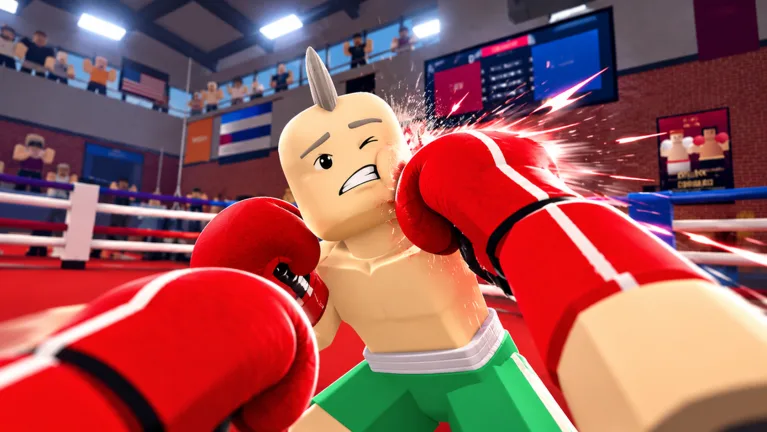
First Person Boxing Footwork and Distance Control Guide
Master first person boxing footwork and spacing in Roblox with expert ring geometry, stance balance, and agility techniques.
Published: First Person Boxing Wiki Editorial Team
Table of Contents
Mastering Ring Geometry and Virtual Spacing
Entering the virtual ring without a solid movement plan usually leads to getting cornered, exhausted, and knocked out quickly. Understanding first person boxing footwork and spacing is the ultimate differentiator between casual players and elite contenders in immersive Roblox combat experiences. When you lock down your positioning, every step serves a distinct tactical purpose rather than wasting precious stamina.
Virtual combat relies heavily on micro-adjustments and spatial awareness, especially when simulating realistic physics inside the First Person Boxing Roblox experience. Without proper distance management, you will constantly overextend your punches and expose your virtual chin to devastating counter-attacks. This guide breaks down advanced movement principles, biomechanical tips, and tactical drills to elevate your fighting standard.
Movement Skill
Common Beginner Mistake
Expert Correction Technique
Stance Width
Wide, heavy stances that drain stamina
Narrow, balanced base for rapid pivots
Foot Contact
Flat-footed stepping or heel drops
Using the balls of the feet for quick springs
Spine Alignment
Leaning forward or tilting dangerously
Keeping an upright axis for effortless rotation
The Anatomy of Elite Ring Movement
Good footwork starts from the ground up, requiring an intimate understanding of how human anatomy translates into virtual space. Many players struggle with sluggish movement because they treat their upper and lower body as completely separate entities. In reality, all powerful kinetic energy originates from your core and flows seamlessly through your extremities.
According to player experience and community reports within competitive combat circles, maintaining a straight spine acts as your primary axis of rotation. When your spine remains upright, your weight distributes evenly across your base, allowing you to spin and slip without losing balance. Tilting your upper body too far forward compromises your recovery time, leaving you vulnerable to heavy combinations.
Core Axis Alignment
Keep your spine straight during linear movement to maximize balance. A straight spine allows you to glide across the canvas effortlessly, while a tilted spine should only be reserved for micro-adjustments during head movement and slips.
Optimizing Foot Placement and Balance
Your points of contact with the virtual canvas dictate how fast you can react to an opponent's blitz. Stepping with your heels first introduces unnecessary lag and stiffness into your motion, comparable to walking in heavy boots. Instead, skilled fighters rely on the metatarsals—the balls of the feet—to initiate and finish every single displacement.
Engage the Metatarsals: Always land and push off using the balls of your feet to maintain springiness and agility.
Narrow Your Base: Bring your feet closer to hip-width to unlock wider, faster rotational pivots without jumping.
Execute Small Steps: Avoid over-committing to giant leaps; instead, take micro-steps to stay constantly inside the edge of your scoring range.
To visualize how different foot placements impact your agility and stamina management, review the performance metrics outlined below.
Step Type
Energy Cost
Speed Rating
Stability Level
Heel-First Step
Very High
Slow
Poor
Toe-First Step
Low
Fast
Excellent
Micro-Step
Minimal
Maximum
High
Controlling the Pocket with Micro-Steps
Distance management is not about running across the entire canvas; it is about staying right on the razor-thin edge of your opponent's range. When practicing first person boxing footwork and spacing, your goal should be moving barely in and barely out. Over-jumping into the pocket leaves you stranded with zero defensive options when your opponent fires back.
Community reports emphasize that mastering the art of controlled walking—similar to legendary defensive tacticians—saves massive amounts of stamina. Rather than bounding around wildly like an amateur, calm pacing allows you to stalk opponents methodically while keeping your guard tight and responsive.
Tip
Practice shadowboxing in front of a mirror or virtual boundary, focusing entirely on shrinking your step size by half while doubling your directional frequency.
Advanced Angles and Ring Generalship
Once you master linear movement, incorporating dynamic angles transforms your defensive profile into an impenetrable puzzle. Pointing your lead foot in the exact direction you intend to travel initiates natural gravity shifts, making directional changes feel weightless and instantaneous.
Tactical Scenario
Recommended Footwork Strategy
Key Advantage
Stalking Aggressors
Controlled walking with micro-steps
Conserves stamina and neutralizes power
Evading Corner Traps
Quick pivots off the lead foot
Creates instant exit lanes
Counter-Punching
Ball-of-foot anchoring
Delivers maximum rotational power transfer
Warning
Never cross your feet entirely when moving laterally unless you are executing an advanced, calculated pivot; casual foot-crossing in the middle of a flurry will instantly destroy your balance.
Frequently Asked Questions
What makes first person boxing footwork and spacing so important?
Proper footwork and spacing allow you to dictate the pace of the fight, conserve your stamina bar, and land clean punches while staying entirely out of your opponent's counter range.
How can I stop my virtual character from feeling sluggish?
Focus on keeping a narrower stance, stepping exclusively on the balls of your feet, and eliminating over-sized leaps in favor of sharp, controlled micro-movements.
Is a wide stance ever useful in combat games?
While wide stances offer stability for heavy grappling or specific defensive shells, they severely limit your rotation speed and foot agility, making it harder to escape trouble quickly.